


Last week I had the privilege of attending the First Nations Public Libraries Spring Gathering, and I’ve been thinking about it ever since.
The Spring Gathering is an annual invitation-only gathering sponsored by the Ontario Library Service and programmed by on-reserve public library staff. This year was hosted by Rama Public Library, with leadership from Danielle Big Canoe Snake, and I’m so grateful to have been invited to be part of it.
It was my third time attending, and one of those experiences that stays with you long after you’ve packed your bag and headed back down the 400.
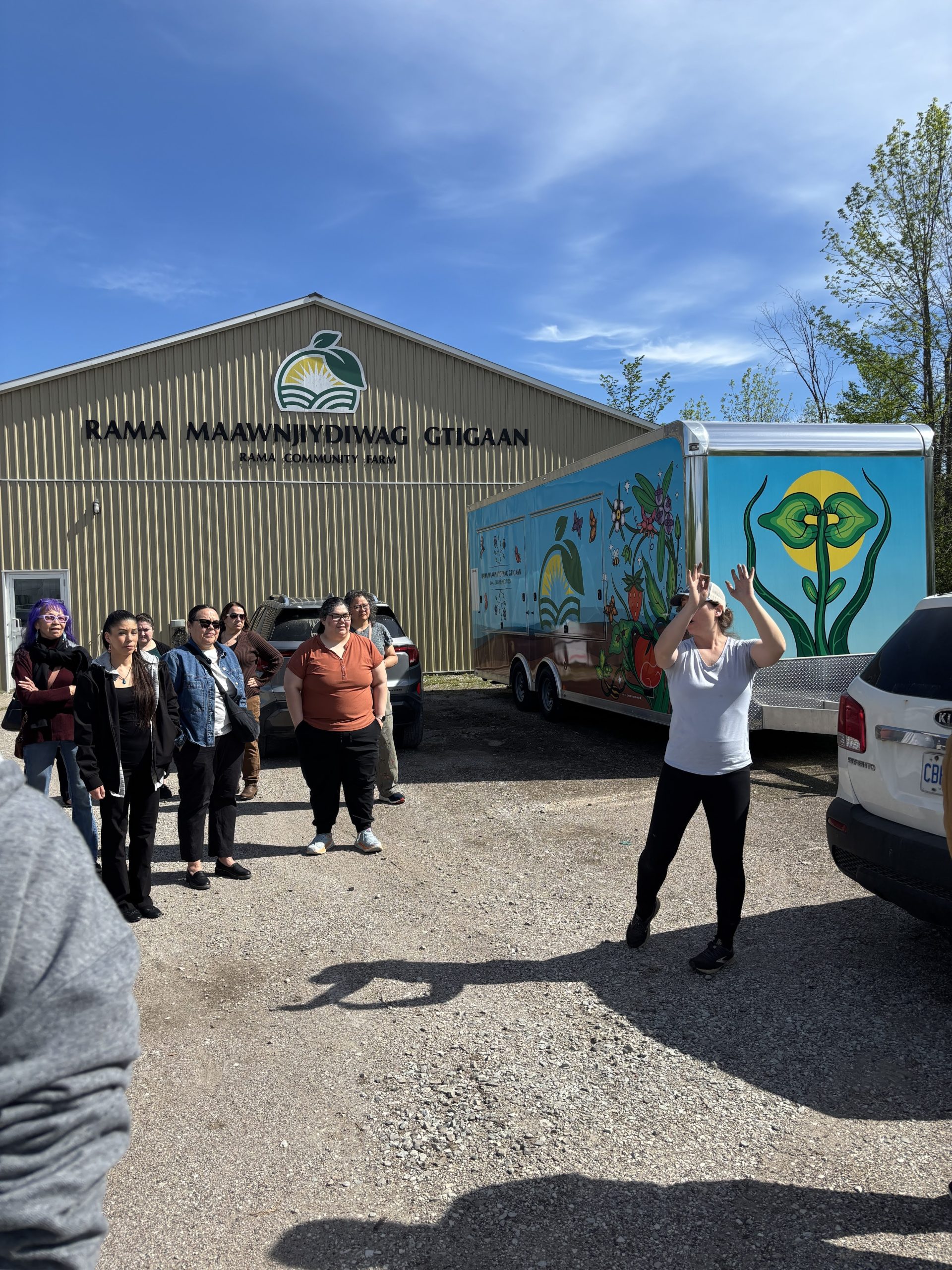
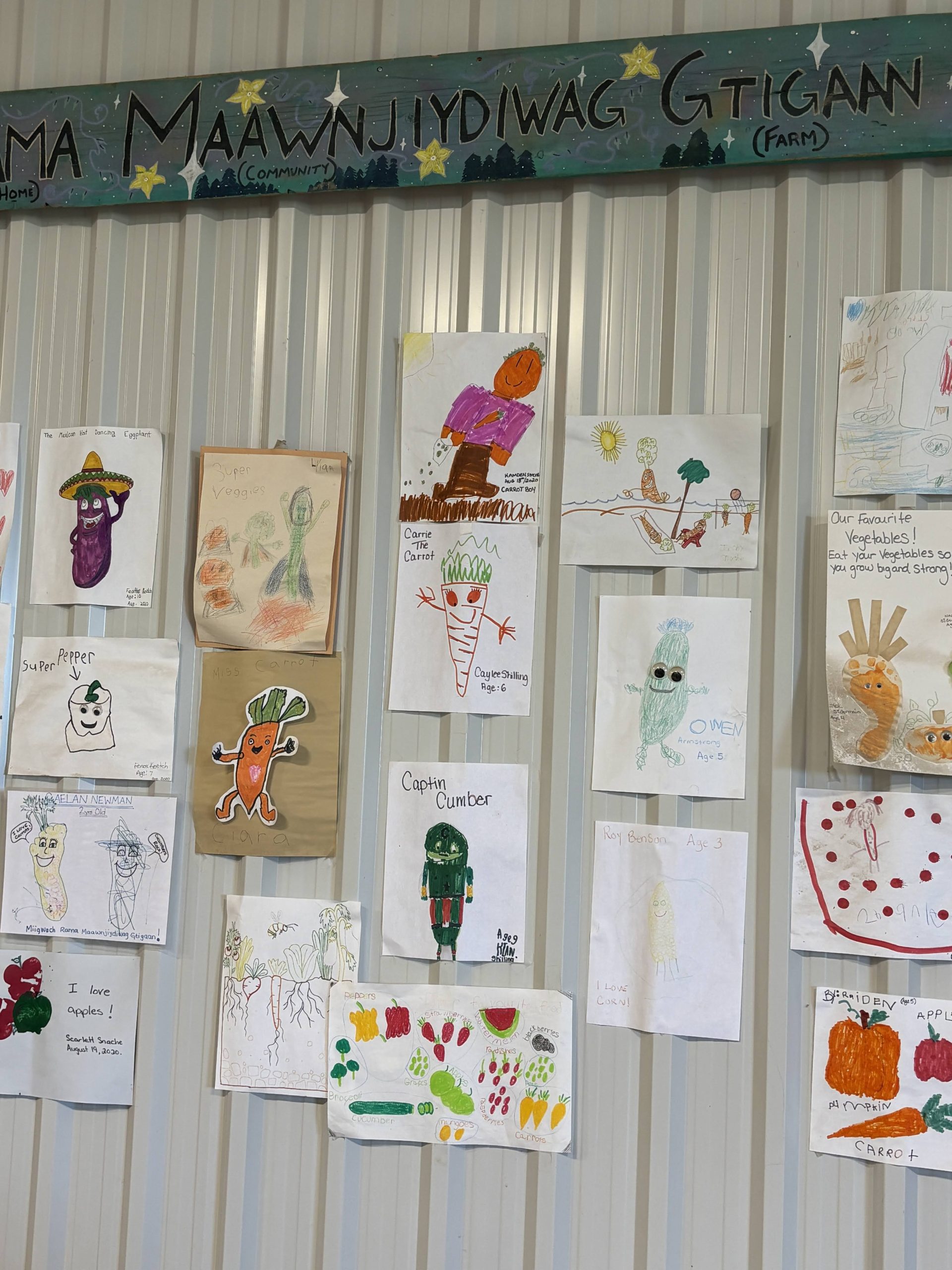
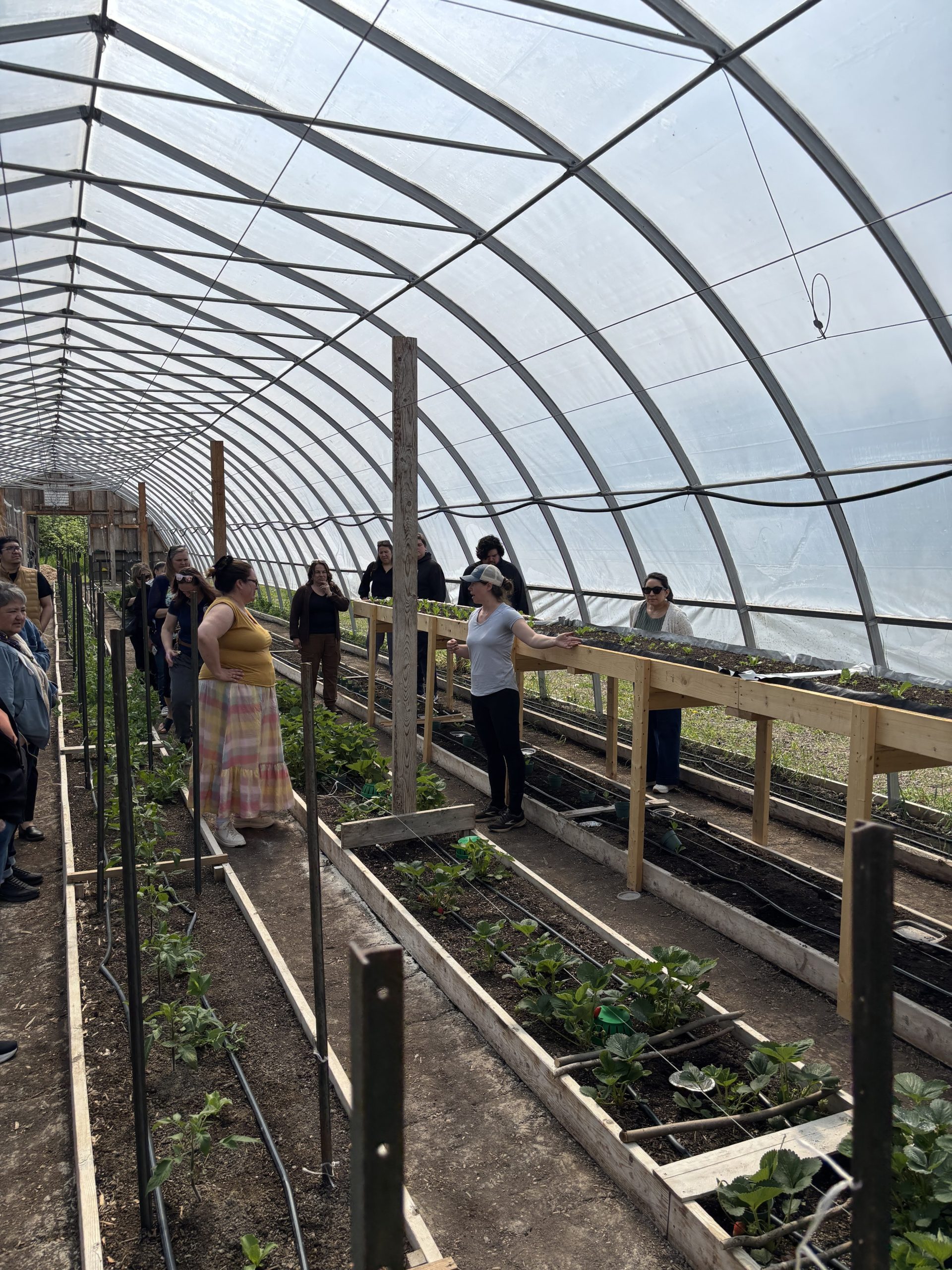
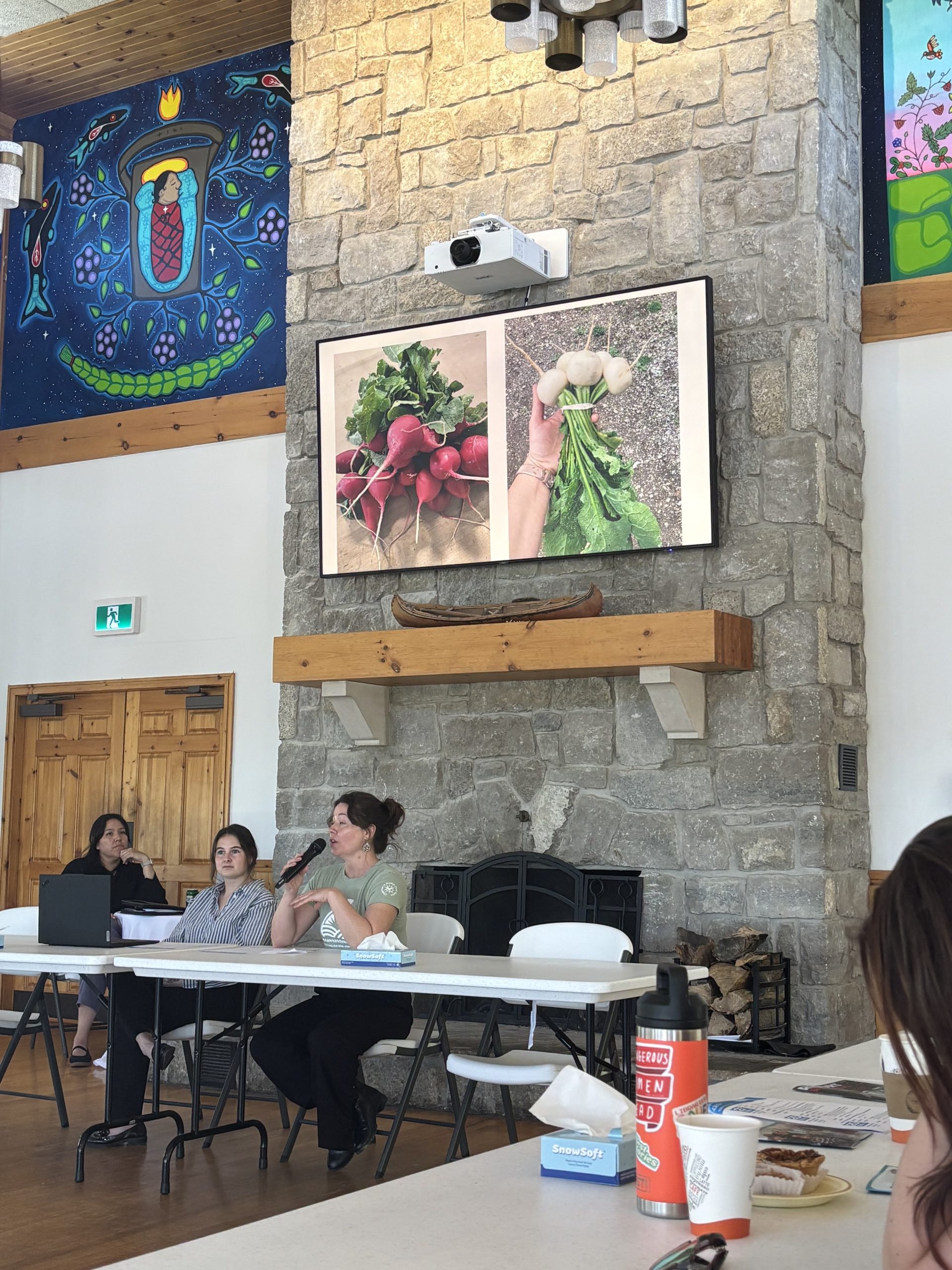
We began the week with a tour of Rama First Nation, visiting Giiwedin Ki, the John Snake Memorial Grounds, and Hub’s Rock. We also visited the Rama community farm – Maawnjiydiwag Gtigaan – taking time to talk about food sovereignty and building capacity in the community. It was a meaningful reminder that knowledge-sharing takes many forms. I also learned more about potato bug infestations than I ever thought I’d need – but now I know so many tricks to keep them at bay!
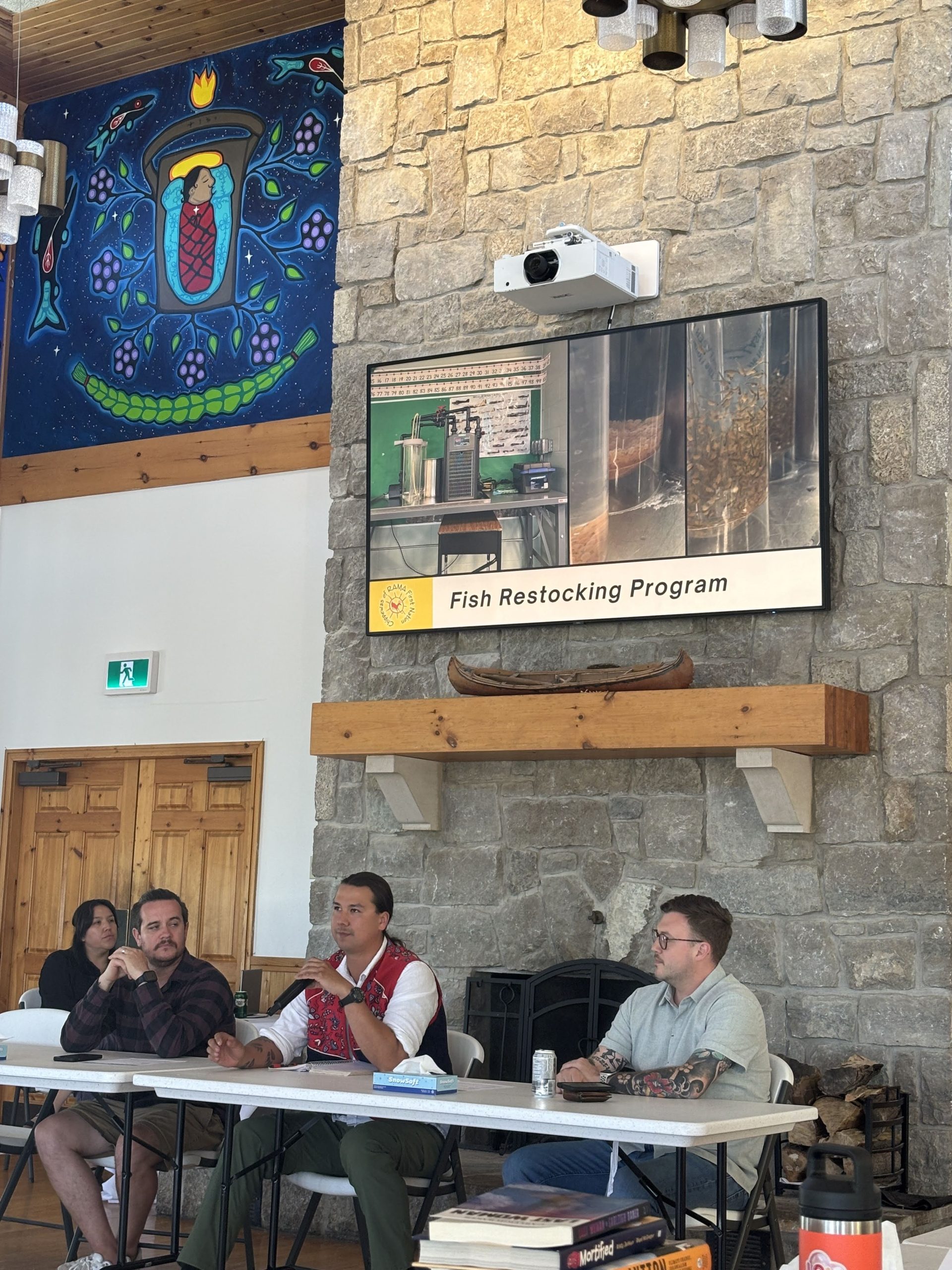
One of the highlights of the first day was hearing from three speakers from the region, each sharing knowledge rooted in place, practice, and family connection. Ben Benson spoke about local conservation initiatives, including a fish restocking project to help restore lake trout populations, as well as the youth workshops he leads on hunting, trapping, and traditional food preparation, from butchering geese and fish to, most recently, bison. His reflections on land, food systems, and teaching the next generation were so inspiring.
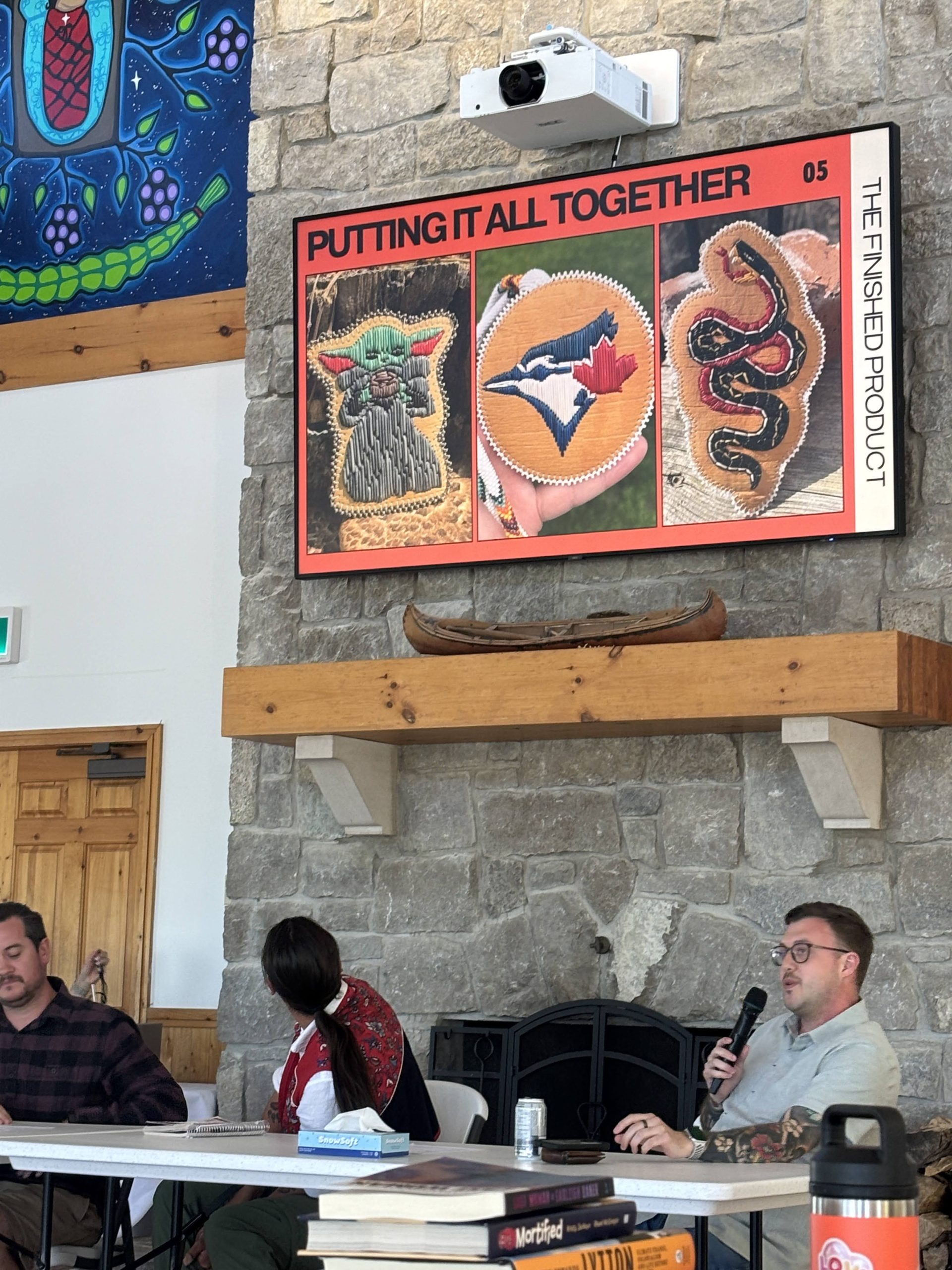
Dillon Bickell shared his work in quilling, using porcupine quills and birch bark to create incredibly intricate artwork. I was fascinated to learn that nearly all of the quills they use are gathered from roadkill and then cleaned, sorted, dyed, and worked with such care and patience. We also had a very interesting conversation about the importance of birch bark, a material long used by Indigenous peoples. Birch trees play an important role in forest ecosystems and are indicators of environmental stress.
Ben Cousineau spoke about genealogy research and the importance of kinship, beginning with a question that feels both simple and profound: Who’s your family? He talked about how that question helps establish connection and belonging, while also reflecting on how the Sixties Scoop has made that research more complex for many families. He brought humour to it too, joking that sometimes the research can help answer an important question: not just who your relatives are, but who is off-limits when it comes to dating and marriage.
The second day shifted toward library-specific learning, with a strong focus on practical tools and skill-building. Allison Pilon led a workshop on Building Readers from Birth, offering practical and age-inclusive strategies for nurturing reading from birth through adulthood. It was such a strong reminder that reading development is lifelong work.
We also rolled up our sleeves for hands-on training to work with spreadsheet data in practical ways and discussed how to turn numbers into stories and stories into advocacy.
On the final morning, I joined Tea and Chat, a weekly gathering facilitated by OLS that creates space for FNPL librarians to connect with peers, share experiences, and reflect together. This was my first Tea and Chat, and being able to participate in person was really special. Listening to people speak openly about their work, their communities, the challenges they’re navigating, and the wins worth celebrating was a real gift. We also took some time to honour and congratulate Kathleen Copegog from Beausoleil First Nation, as she plans to retire in September. She’ll be missed!
The Gathering closed with a presentation from Victoria Deleary, Indigenous Engagement Advisor at Library and Archives Canada. She spoke to Indigenous data sovereignty and explored the role LAC can play in supporting FNIM communities in reclaiming authority over their data. It was a fascinating and important conversation, especially in thinking about access and the future of information work in libraries.
I left feeling fortunate to have been included, thankful for the generosity of everyone who shared their knowledge and energized by the opportunity to listen and learn. Also, if you find yourself in Orillia, be sure to check out the Mariposa Bakery and try The Homer Donut. Some recommendations are too important not to share.
Thank you to Nancy and Deanna at OLS for organizing, to Danielle, Johnathon and Nicole at Rama Public Library for being impeccable hosts, and to everyone who welcomed me into the space. It was an honour to gather with you all!
See you next Tuesday!
Meet the Author
Michelle Arbuckle
Executive Director, OLA
Michelle Arbuckle is OLA’s Executive Director. Reporting to the OLA Board of Directors, Michelle’s key responsibilities are government relations, advocacy, partnership development, the implementation of the strategic plan and supporting the exceptional OLA staff team. She is an avid lifelong learner, a tea sommelier, and wants to know your astrological sign.