


Ditching the Decimal: A Non-Fiction Section Refresh
Aggie Gasior
May 5, 2026
Weeding outdated materials, adding signage, trying dynamic shelving – none of it worked. Despite my efforts, students still found our elementary school’s non-fiction section unintuitive and overwhelming. They couldn’t find what they wanted, so they stopped looking.
Then I discovered “Ditching Dewey.” After researching the concept, I decided to replace the outdated classification system of Melvil Dewey with a student-centered organization by topic. Launched in late 2024 and completed by spring 2025, here is how we transformed our space:
Step 1: Ruthless Weeding. Be merciless. I removed any title that hadn’t circulated in five years or was published before 2010 (unless the info, like dinosaurs, was evergreen). This also ensured any culturally insensitive or visually dated materials were removed.
Step 2: Engaging Students. I formed a Student NF Committee of volunteers from Grades 3–8. Meeting twice a week, we pulled everything off the shelves and grouped books into categories that made sense to them. For example, they grouped Remembrance Day, WWII, and the Canadian Military together, rather than leaving them scattered across three different Dewey sections. Titles that weren’t immediately obvious, were set aside for a later date. It was a messy, but essential step.
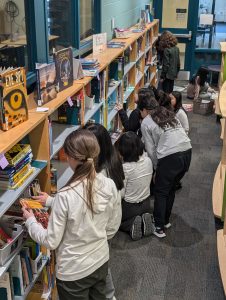
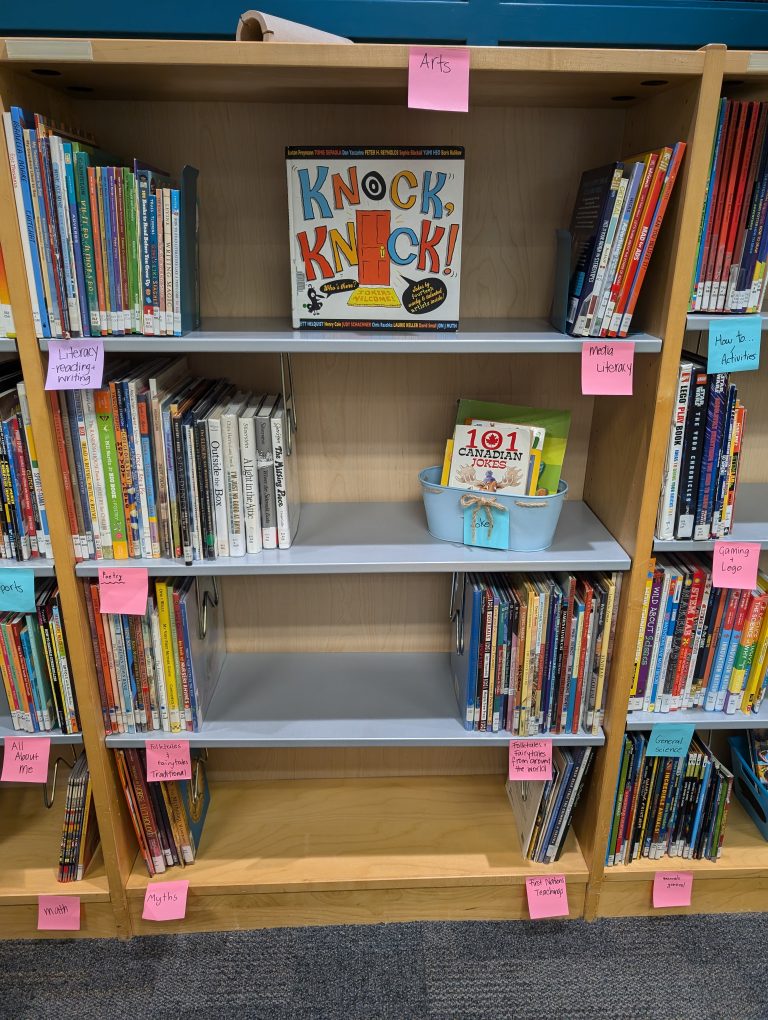
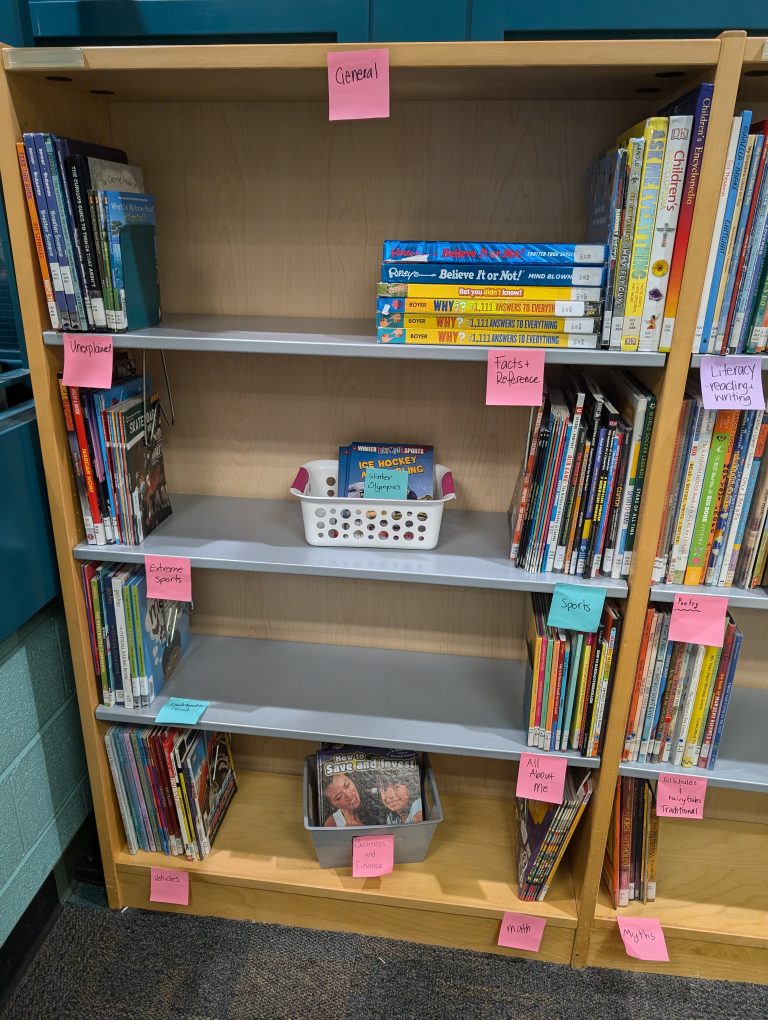
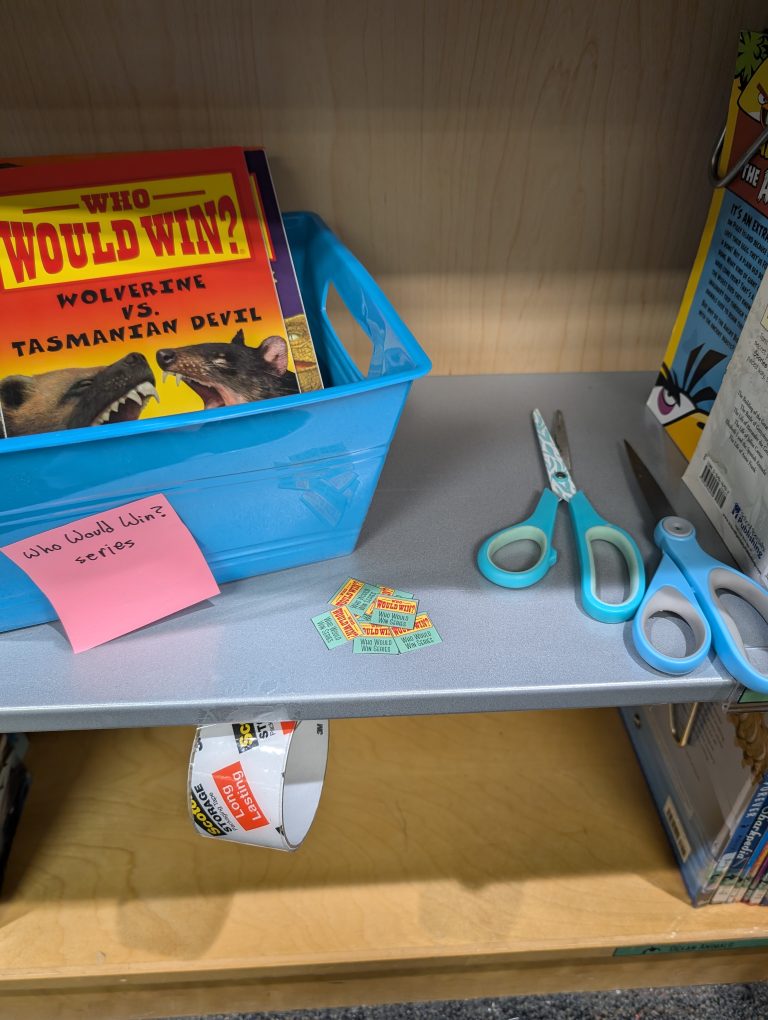
Step 3: Categorizing. This step proved to be the easiest one, and the topics naturally evolved into seven major umbrellas: Language & Arts; Social Studies; Science; World History & Geography; Canadian History & Geography; Biographies & Memoirs; and General. Once these were set, we started reshelving the piles.
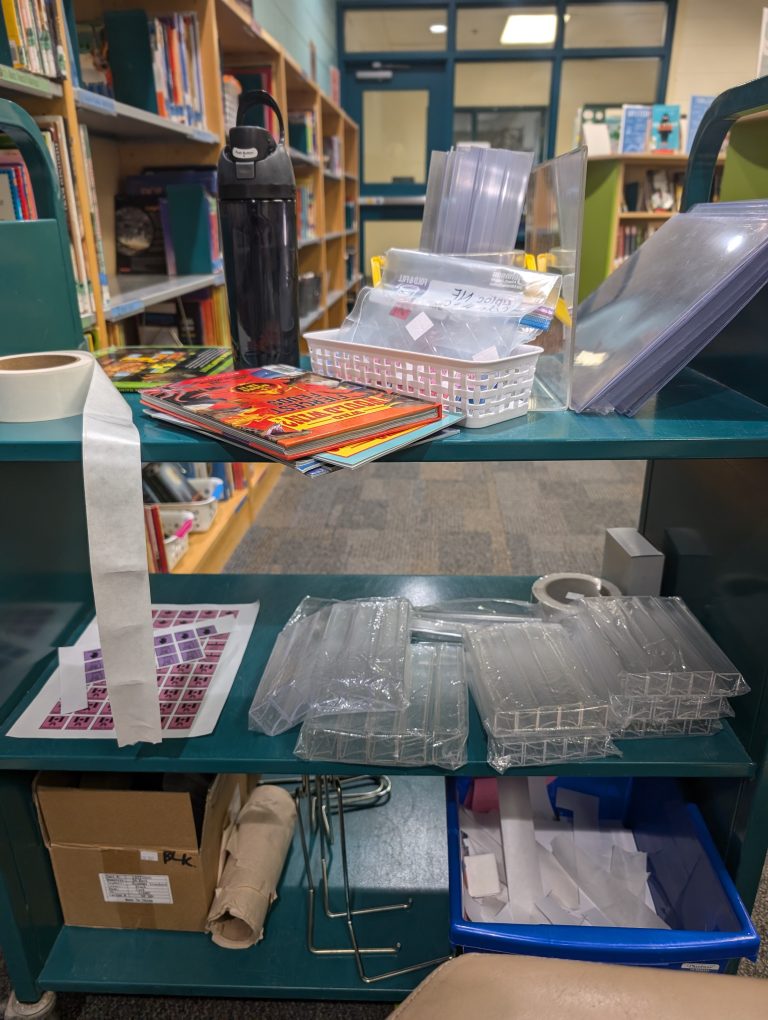
Step 4: Visual Rebranding. I used Canva to create color-coded spine labels and signage. Each spine label now features a topic icon and name that matches the shelf signage. While printing and stickering every book took about four months (a few books at a time), the visual clarity was worth the effort.
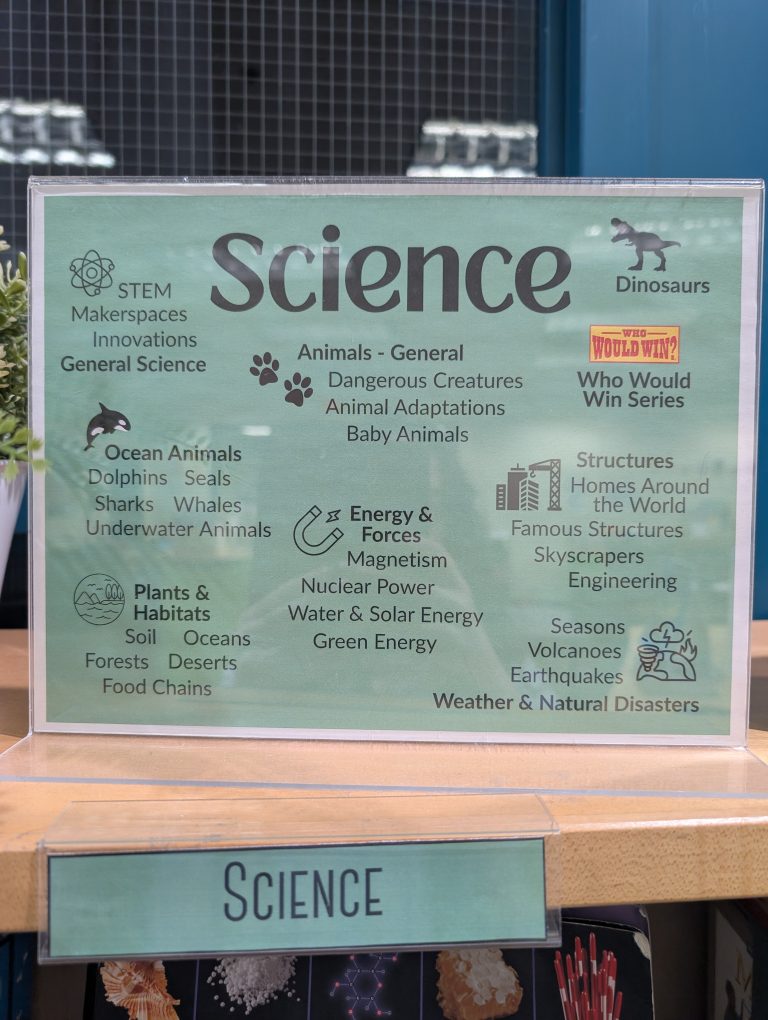
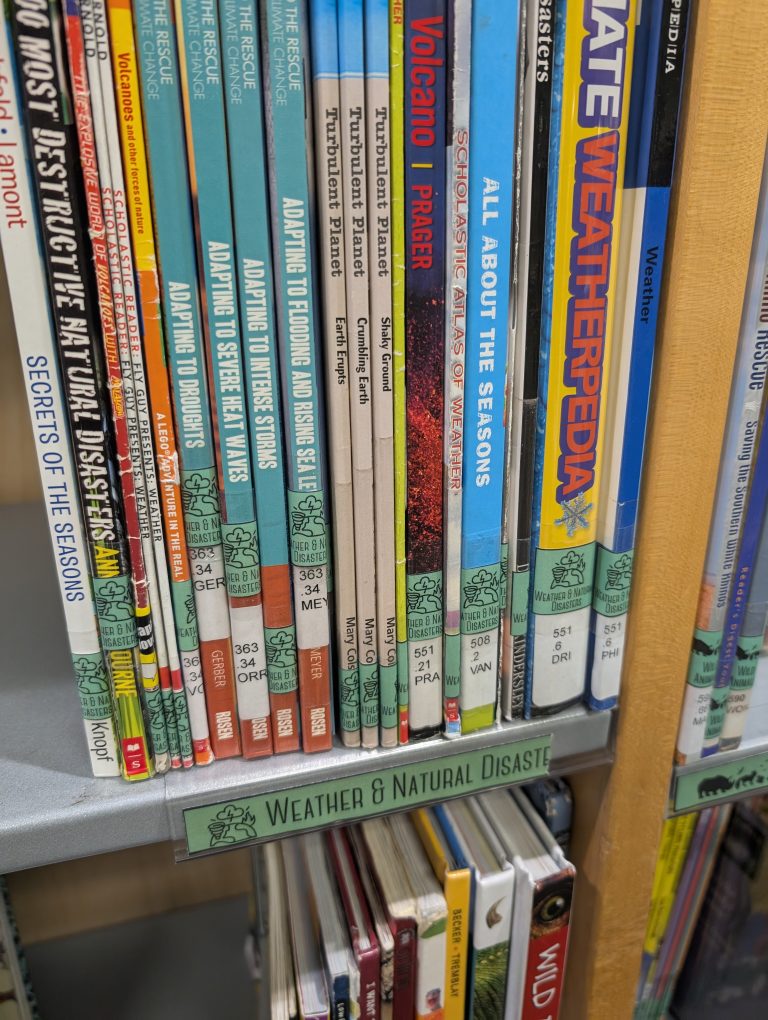
Step 5: Launching. Don’t forget to promote the new section. After a mid-year orientation to introduce the new layout, the response was immediate. Students loved the autonomy of the new system. Our non-fiction circulation spiked instantly and has remained steady a year later.
Ready to Ditch Dewey? If you’re considering a similar shift, I recommend the following resources to get you started:
- Podcast: School Librarians United with Amy Hermon (search for NF management episodes).
- Blog: Don’t Shush Me by Kelsey Bogan, specifically her three-part series on Ditching Dewey.
- Instagram: @CanuckClassroom – I do a detailed walk-through of the newly remodeled space on my teachergram (look for the Ditching Dewey highlight reel).
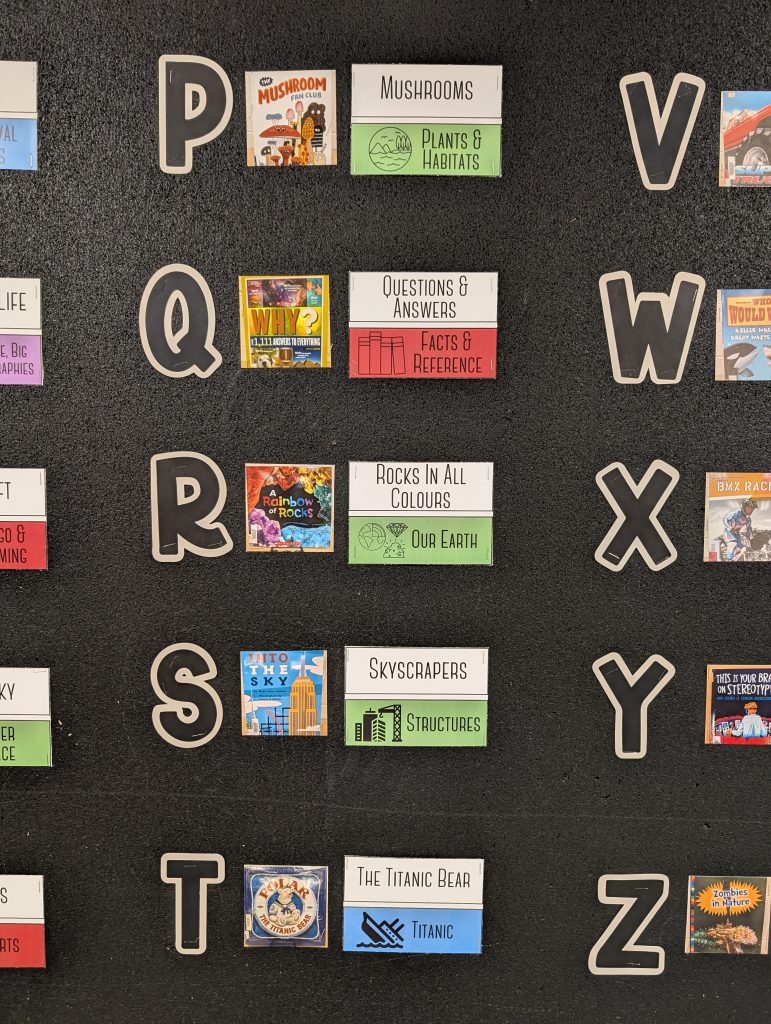
If you are interested in using the signage featured here and in the Instagram video, you can find the Canva files here: Section Topic Posters; Spine Labels; Shelf Labels.
Ultimately, every library is unique, so feel free to adapt these steps to your community. Whether you follow these steps or create your own, if your students are actually excited to browse the shelves, you’re doing it right.
Meet the Author
Aggie Gasior
Aggie Gasior is a dedicated YRDSB Teacher-Librarian in Thornhill, Ontario, passionate about connecting every K–8 student with the perfect book to spark their love of reading.
For more information about The Teaching Librarian, please refer to the Terms of Reference.
Recent Articles
Friction-Free Fiction: Reorganizing the Stacks for Student Success
“Where are the scary books?”
“Do you have any fantasy like Percy Jackson?”
“I like sports. Any novels about that?”
If you’ve worked a day in a school library, chances are you’ve heard similar questions.
Leading the Way: How School Librarians Can Support AI Use in the Classroom
For many educators, the arrival of artificial intelligence in schools can feel a little like the opening scene of a Star Wars film…
Read the Library: A Community Challenge
There is always that point in the school year, after everyone is settled, orientation is complete and the excitement of our first library book check-out settles, where I find students start returning to their favourite reads. But we have so many great books in the library!
Author Spotlight: Colby Sharp
This issue’s “Author Spotlight” feature is veering into new territory. We decided that what would really help our library staff members as they return to schools in September would be to connect you all with Colby Sharp.
Author Spotlight: Kelley Armstrong
I read my first book by Kelley Armstrong, The Summoning, when it launched in 2009. As an elementary school teacher-librarian, I was always on the lookout for great books for my students, but at the time I was also curating books for intermediate literature circles for my school board.
Ditching the Decimal: A Non-Fiction Section Refresh
Weeding outdated materials, adding signage, trying dynamic shelving – none of it worked. Despite my efforts, students still found our elementary school’s non-fiction section unintuitive and overwhelming. They couldn’t find what they wanted, so they stopped looking.