


Author Spotlight: Kelley Armstrong
Martha Brack Martin
May 5, 2026
I read my first book by Kelley Armstrong, The Summoning, when it launched in 2009. As an elementary school teacher-librarian, I was always on the lookout for great books for my students, but at the time I was also curating books for intermediate literature circles for my school board. The Summoning was a huge hit with our students and soon Kelley’s books started filling our library’s shelves. (Full disclosure: they started filling my shelves at home as well!)
Kelley is a prolific novelist. In 2002 she quit her day job as a computer programmer and has written full-time from her home in rural southern Ontario ever since. Her dedication to her craft shows in her extensive catalogue. She’s also more than a “one-trick-pony,” writing across genres and age groups.
TingL: Thanks for talking with me today, Kelley!
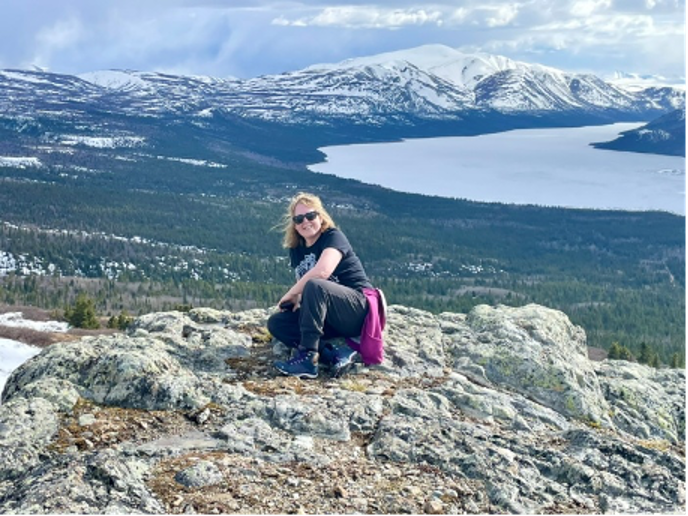
Kelley: Thank you! I’m looking forward to chatting.
Your first published novel was Bitten (2001), an adult werewolf story that became the start of your Otherworld series. Since then you’ve written many more novels featuring supernatural elements, including two fantasy series for children (A Royal Guide to Monster Slaying and The Blackwell Pages, with Melissa Marr) and three young adult series (Darkest Powers, Darkness Rising and the fantasy series Age of Legends). Clearly you’ve embraced the paranormal. Was fantasy your favourite genre when you were a kid?
As a child, I gravitated more toward action, adventure and mystery, though if it had dogs or ghosts, that was a bonus. As a preteen, I started moving into fantasy and horror. This probably explains why I write in so many genres and like to mix them together.
When you got your first contract, you were working a full-time job and living in the countryside of southern Ontario. How did Bitten find its way to a big city publisher from small town Canada?
I’ve been writing since childhood. In my twenties, I moved from short stories to novels. Bitten was my fourth attempt. I had an instructor look at it to see how well I was progressing. He offered to recommend it to an agent and things took off from there. It was a long road, paved with many form-letter rejections, but once I got my first “yes,” my career launched.
You and Charlaine Harris (of Sookie Stackhouse/True Blood fame) launched your respective series the same year (and you both were ahead of Twilight!). Obviously, the world was eager for what you were offering because you both were hugely successful. Some would say you were the precursors to the Romantasy genre currently dominating the bestseller lists. Why do you think paranormal was so big at the time?
It’s interesting to look back at the beginning of that period. Laurell K. Hamilton had a few books out in what we’d soon call Urban Fantasy, but they weren’t yet as huge as they’d become. Then Charlaine Harris, Jim Butcher, and I published the first in our series within a year of one another. Laurell’s books took off and we were there for readers who wanted more (as well as finding our own audiences.) We all independently published a similar type of book—mystery/thriller in a modern world with supernaturals. The paranormal romance surge followed (similar books, more romance). As for why those two “sister genres” exploded, I always think that when that happens, there’s something in the air at the time and readers are hungry for a certain kind of book. Bitten came out in September 2001, right after 9/11. Like the others, it offered escapist fantasy with main characters who could hold their own against whatever threat they faced. Or maybe that’s overthinking it and people were just in the mood to read something weird and different!
Why do you think Romantasy is so popular right now? Is it just a logical continuation of how popular romance and fantasy have always been, or do you think something more is going on?
Part of it is cyclic. The twenty-somethings who drive Romantasy grew up after the Twilight era. They’re ready for their own mix of fantasy and romance, and they found it in early Romantasy hits like A Court of Thorns and Roses and Fourth Wing. But I think it’s also, again, the current world situation, the same forces that are driving genres at either end of the spectrum. Right now, horror is having a moment (yay for me, as someone who has been waiting 25 years for that). In horror, we get to go on a wild ride with characters whose world is definitely worse than our own. But we’re also seeing a surge in cozy—not just mystery, but also fantasy and romance. Readers seem to either want a fictional world that’s darker than ours…or much kinder and gentler than ours. Both are a form of escapism.
That’s interesting. I hadn’t associated the “cozy” trend with current events, but that makes sense. Personally, right now I find myself drawn to stories where I know the good guys are going to win, and I don’t even mind that predictability because our own world offers so little these days.
Yes. Genres often get bashed for “predictable” endings—we know the mystery will be solved, we know the lovers will resolve their issues, etc. Yet I see that as a feature, not a bug. Sometimes we just need to know all will be well so we can sit back and enjoy the ride.
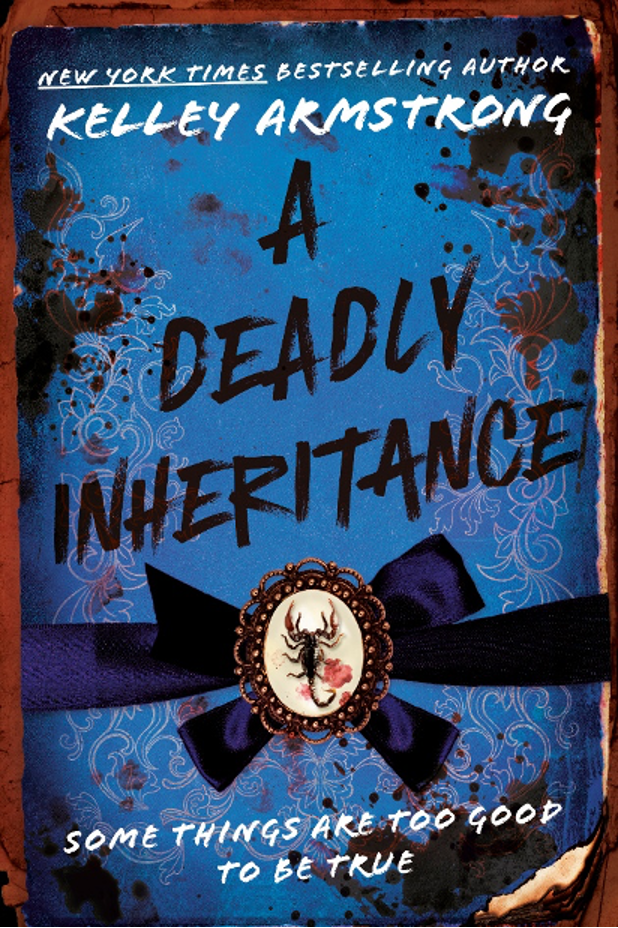
Besides your various series, you’ve also got an extensive catalogue of standalones, both for young adult and adult readers. I just finished your latest young adult thriller, A Deadly Inheritance, and I really enjoyed it. The mystery had some great red herrings, and I liked the way you had fun subverting the stereotypical YA characters we see in so many books today.
That was a fun one to write. It was me taking very standard YA tropes that I personally enjoy—like sudden inheritances, boarding schools with dark mysteries, romantic triangles—and giving them a twist. I’ve always said that it’s easier to subvert tropes in YA because teens haven’t seen those tropes enough to be very clear about how they “should” play out. They’re more flexible and open to possibilities. Also, I just like writing teen characters. The older I get, the more people my own age start to sound like old folks back when I was a teen—grumbling about how teenagers “these days” are all this or that. The reality is very different, and I like to show that variety and the promise of young people figuring out who they are and what they want to be.
Did you start writing standalones as a marketing choice, or were they just a natural progression of your work?
Series are comfortable, both for writers and readers. The characters, setting, tone and world are all preset. What standalones do for me is provide a creative palate cleanser. Back-to-back series books start to feel a bit like a rut. With a standalone, I can do whatever I want, knowing it’s just for one book. Then I’m happy to get back to my series!
Since we’re talking about your standalones, I love that you’ve moved into adult rom-coms! Again, I have to ask – how did these come about? Are there more on the horizon?
It was an accident. I had an idea that happened to be a romcom. I had a lot of fun writing the two of them, but I also discovered I’m not really cut out for writing romances. I’m happier when the romantic relationship is a strong subplot. I could do cross-genre (romantic suspense, romantasy) but just romance is a struggle. My creative well runs dry fast.
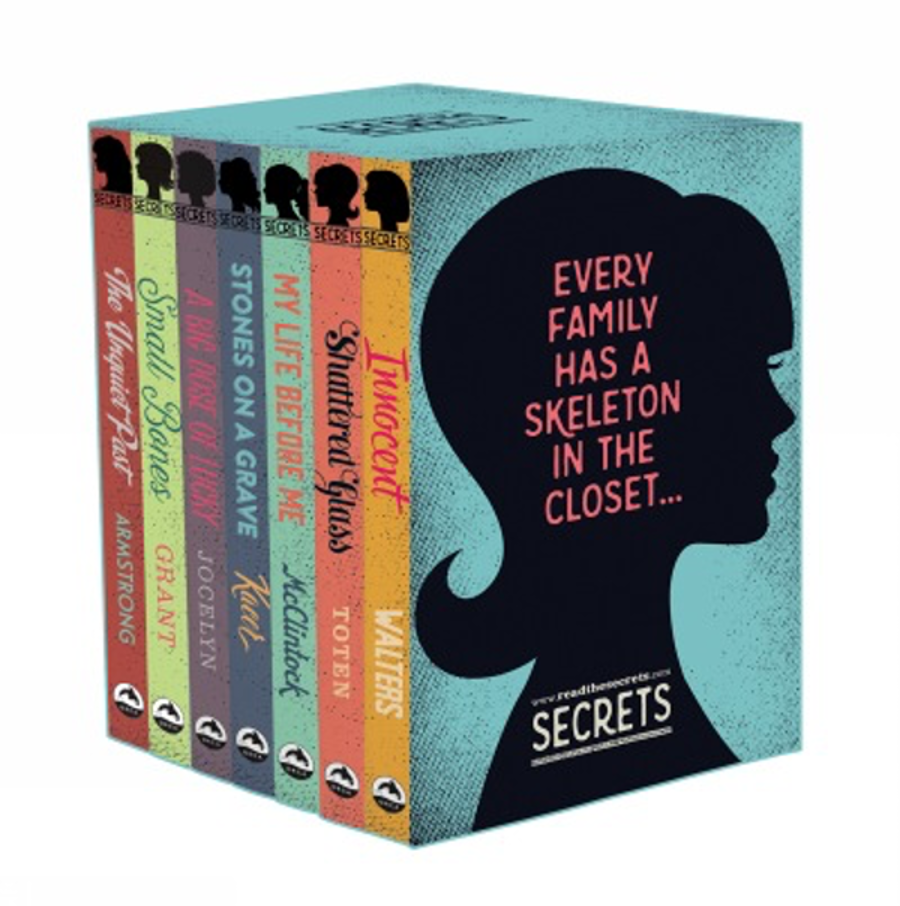
You were one of the seven Canadian authors chosen to write the Secrets series, published by Orca Books in 2015 as a companion to their bestselling Seven series. That was your first time writing a series with different authors each doing their own book as part of an overarching concept, right?
Yes, it was my first—and only—time doing that.
How was that experience?
I had a blast. I love creative challenges and with this one, I also got to write a series with authors I admired.
I know you write fulltime now, and you’ve spoken about the need to be disciplined in order to meet timelines. But you are a publishing machine! You have multiple books in different genres – and for different audiences no less – all coming out in the same year. How do you do it?
As my kids got older, my output picked up. That’s what happens when you start with a book-a-year commitment while raising little ones. I’ve also just gotten faster. I’ve been doing this for a very long time and I can turn my writing brain on easily—no need to wait for inspiration to strike. I have a routine that works for me, too. Mornings are for editing. Afternoons are writing, where I join other authors online and get my weekday 2K done in two hours of sprints. Then, if needed, business and marketing stuff fall in after that.
You join other authors to write online? How does that work?
It started with a Facebook group of urban fantasy authors and picked up others along the way. We sign onto Zoom for the same two hours each day and write in sprints, with a couple of check-ins to break things up. It’s not for everyone, but it works really well for those who like routine. I know if I log in, I’m guaranteed to hit my word count for the day.
Do you ever get any down time?
As much as I love my work, I do try for work/life balance. I read a lot, of course. I’m into all forms of pop culture–movies, music, TV, video games etc. The older I get, the more I exercise, and the more outdoor activities I do, both on my own and with my family.
So what’s next for you? Any news you can share?
Everything is ticking along very nicely these days. I have a full writing schedule, so there isn’t the stress of worrying about what comes next. I’m wrapping up my Rockton/Haven’s Rock series next year and starting a new mystery series, which is exciting. I’m continuing my Rip Through Time historical mystery series and my horror, with a few little side projects thrown in to keep things interesting.
You really are a writing powerhouse, and it doesn’t sound like you’re planning to slow down anytime soon. You’re obviously still having fun and that comes through in your writing. Thanks for being so dedicated to your craft and thanks for chatting with me today.
Thank you so much! It was lots of fun and I appreciate the great questions!
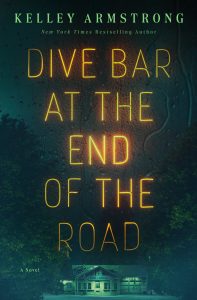
To learn more about Kelley, her latest books and her writing retreats, check out these resources:
Meet the Author
Martha Brack Martin
Martha Brack Martin is a retired teacher librarian (GECDSB) and published children’s author (Orca, Crabtree).
For more information about The Teaching Librarian, please refer to the Terms of Reference.
Recent Articles
Friction-Free Fiction: Reorganizing the Stacks for Student Success
“Where are the scary books?”
“Do you have any fantasy like Percy Jackson?”
“I like sports. Any novels about that?”
If you’ve worked a day in a school library, chances are you’ve heard similar questions.
Leading the Way: How School Librarians Can Support AI Use in the Classroom
For many educators, the arrival of artificial intelligence in schools can feel a little like the opening scene of a Star Wars film…
Read the Library: A Community Challenge
There is always that point in the school year, after everyone is settled, orientation is complete and the excitement of our first library book check-out settles, where I find students start returning to their favourite reads. But we have so many great books in the library!
Author Spotlight: Colby Sharp
This issue’s “Author Spotlight” feature is veering into new territory. We decided that what would really help our library staff members as they return to schools in September would be to connect you all with Colby Sharp.
Author Spotlight: Kelley Armstrong
I read my first book by Kelley Armstrong, The Summoning, when it launched in 2009. As an elementary school teacher-librarian, I was always on the lookout for great books for my students, but at the time I was also curating books for intermediate literature circles for my school board.
Ditching the Decimal: A Non-Fiction Section Refresh
Weeding outdated materials, adding signage, trying dynamic shelving – none of it worked. Despite my efforts, students still found our elementary school’s non-fiction section unintuitive and overwhelming. They couldn’t find what they wanted, so they stopped looking.