


Questions for Candidates: Ontario’s 2026 Municipal Elections
During the municipal council and school board elections period, candidates will participate in community events where members of the public may have opportunities to ask questions. You may also connect with candidates through chance encounters or events organized by your library or community.
These interactions, whether in person or virtual, are valuable opportunities for library supporters to engage in meaningful dialogue. They offer a chance to share the impact of libraries and to better understand where candidates stand on the issues that matter to school and public libraries, as well as library staff.
This resource provides sample questions library supporters can use when speaking with candidates.
Public Libraries
-
Public libraries are essential community hubs that support social connection, civic participation, and lifelong learning.
- How will you ensure residents of all ages continue to have access to public libraries and the services they provide?
-
Libraries rely on stable municipal investment to deliver essential services.
- In the face of competing municipal budget priorities, how will you ensure that libraries are protected?
- Will you commit to maintaining or strengthening funding for public libraries?
-
Ontario public libraries are governed by independent library boards to protect intellectual freedom and ensure equitable service.
- How will you respect the autonomy of the library board and ensure municipal council does not intervene in day-to-day governance or collections decisions?
School Libraries
- School libraries are central to literacy development, inquiry-based learning, and student achievement.
- What role do you believe school libraries and school library staff play in supporting student learning?
- School libraries are most effective when professionally staffed and adequately funded.
- How will you ensure that all students have equitable access to high-quality school library programs?
- School libraries provide access to diverse and inclusive materials.
- What are your views on book challenges and censorship?
- Are you aware of whether your school board has a collection development and reconsideration policy for school library materials?
- If not, would you support working with school library professionals to develop one?
Interested in more questions? Check out the Question Bank below!
Advocacy Postcard: Local Libraries. Local Decisions.
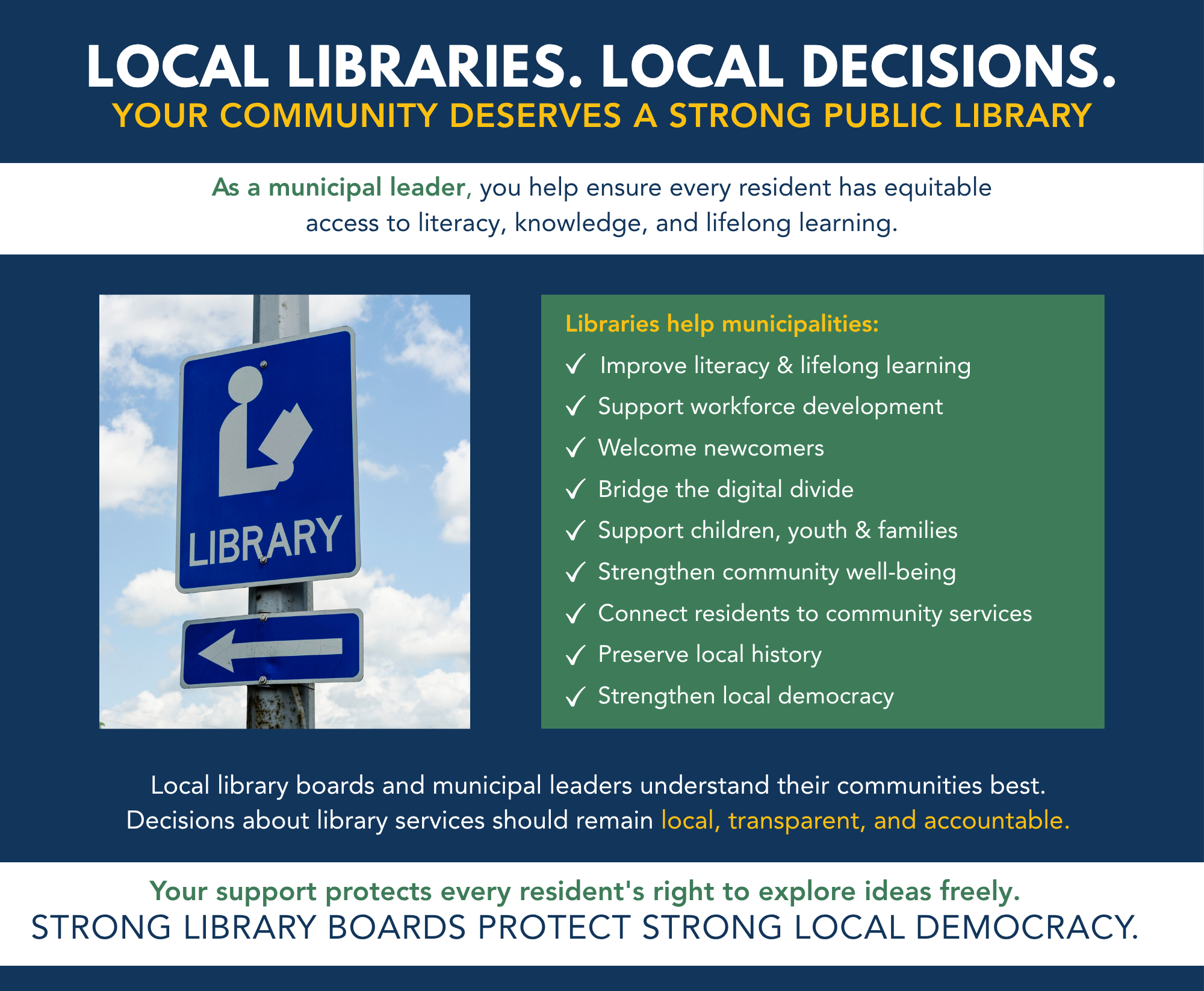
Help educate municipal candidates about the value of public libraries.
Print and share this postcard to help municipal election candidates better understand the role of public libraries in building strong communities.
The postcard introduces key concepts including public library governance, intellectual freedom, equitable access to information, and the many ways libraries serve everyone in your community.
Talking Points: Intellectual Freedom and Public Library Board Governance
The Canadian Federation of Library Associations (CFLA-FCAB) developed the following talking points on intellectual freedom and public library board governance, which the OLA and FOPL are sharing as a resource. These talking points are intended for library workers and allies to use in conversations with election candidates during the municipal election season.
Municipal elections are an important opportunity to reinforce:
- The role of public libraries in providing communities with access to a diversity of knowledge, perspectives, and viewpoints;
- The importance of library boards being able to fulfill their responsibilities independently; and
- The expertise of library staff in selecting, managing, and providing access to information.
Advocating During Elections
Need help with your election season advocacy? Check out this page out of the 2026 OLA Advocacy Toolkit.
Listen to the latest episode of Library Land Loves: Advocating for Libraries: Municipal Election Talk with FOPL’s Dina Stevens.

Other Resources
Question Bank
- What role do you believe public libraries play in the social, educational, and economic well-being of our community?
- What do you see as the most important services public libraries provide beyond lending books?
- How have you personally used or benefitted from public library services, either for yourself or your family? Do you have a library card?
- In your view, what would our community lose if library services were reduced?
- Do you think libraries are essential municipal infrastructure, why or why not?
- Would you support maintaining or increasing library funding to keep pace with population growth or demand?
- Libraries are increasingly responding to issues such as homelessness, mental health challenges, social isolation, and the digital divide. What role do you think municipalities should play in supporting libraries as they respond to these challenges?
- Do you support the principle that public libraries should provide access to a broad range of ideas and viewpoints, even when some materials may be controversial?
- How important do you believe local library boards are in making decisions about library services and collections?
- How should libraries evolve to meet the needs of growing and changing communities?
- What opportunities do you see for libraries to support newcomers, seniors, youth, and underserved populations?
- What specific actions would you take to strengthen public libraries in your community over the next four years?
- Can the community count on you to be a champion for public libraries at the council table?
- What municipal challenge do you think libraries are best positioned to help address?
- What role do you believe school libraries and school library staff play in supporting student learning and literacy development?
- What are your views on the role of school libraries in supporting digital literacy in today’s learning environment?
- How will you ensure that all students, regardless of geography and socioeconomic background, have access to high-quality school library programs?
- Do you agree that school libraries need to be fully staffed and resourced to be effective? Why?
- What are your views on book challenges and censorship in school settings?
- How important is it that school libraries provide access to diverse, inclusive, and representative resources?
- Are you aware of whether your school board has a collection development and reconsideration policy for school library materials? If not, would you support working with school library professionals to develop one?
- What role should school library staff play in supporting classroom teachers and curriculum delivery?
- In your view, what would students lose if school library services or staffing were reduced?
- What opportunities do you see for school libraries to support equity-deserving students, such as Indigenous students, newcomers, and students with diverse learning needs?
- What role do you see school libraries and school library staff playing in helping students understand and use artificial intelligence tools in responsible ways?
- What specific actions would you take to strengthen school library programs across your jurisdiction over the next four years?
- Can the community count on you to be a champion for strong school library programs and staffing at the school board table?